


Curiosity briefing · UNGA81 · Evidence to 28 SEPTEMBER 2026
After New York
what the 2026 UN General Assembly showed, and Africa's next moves
Every September, presidents and ministers meet in New York for the UN General Assembly. At the 81st session in 2026, governments agreed words in the main hall. The money of the week was raised elsewhere, through groups of willing countries, deals between two governments and private foundations. Each of these set its own conditions, from access to health data to help with stopping migration. Aid from richer governments fell by almost a quarter in 2025, the largest fall on record, so those conditions now carry more weight. Africa won every argument about fairness in New York, and senior UN officials agreed that it deserves permanent seats on the Security Council. Yet Africa gained little in the processes where its 54 votes could have been traded for something, such as the choice of the next . The strongest tools Africa has not yet used are at home. They are its electricity grids, the goods and services its governments buy, and the savings held in its .
Start with your role
Choose the description that fits you best. The three recommendations most useful to you appear first.
Four figures that frame everything
- $174.3bn Total aid in 2025, down 23.1% after inflation, the largest fall on record Source: one.oecd.org for $174.3bn (opens in a new tab)
- $2,887bn World military spending in 2025, more than 16 times the aid budget Source: sipri.org for $2,887bn (opens in a new tab)
- $415bn Interest paid by developing countries on their foreign debt in 2024, a record Source: worldbank.org for $415bn (opens in a new tab)
- $33bn The UN's emergency aid appeal for 2026, to reach 135 million people. The 2025 appeal received $12 billion Source: unocha.org for $33bn (opens in a new tab)
What changed, and what did not
Changed
- Health money moved outside the UN system. A meeting called by the United States raised $2.997 billion for Ebola, and African governments gave $110 million of it. Thirty-five countries now have US health agreements that set terms on data and on how much each government must pay.
- Aid became a contract with conditions. Aid fell 23.1% after inflation in 2025. What replaces it asks governments to pay a share, give access to data or control migration. Of the European Union's €710 million package, €380 million is linked to migration.
- The declaration on pandemics was not agreed. On 25 September the United States would not support the text. It now goes to a vote of the whole Assembly before its session ends in December.
- Control of the Red Sea shipping route changed hands. In September the Houthis in Yemen took the town of Mocha and Perim island. Both sit beside the Bab al-Mandeb strait, which carries about 12% of world trade. No African leader raised it.
- Africa split over the next UN Secretary-General. Senegal's President endorsed Macky Sall from the podium. In March, at least 20 African governments had objected to an African Union endorsement or asked for more time. In the third straw poll, Sall drew the most discouraging votes of the leading candidates.
Did not change
- Security Council reform still has no timetable. In July, UN members agreed to continue the reform talks, with no end date and no single text to negotiate.
- Money to help Africa adapt to climate change did not grow. The Climate Summit launched a plan for electricity grids and a group on critical minerals, with no money attached.
- The UN fund for AI is empty. It has a $3 billion target and no pledges, while Africa holds 0.6% of the world's data-centre capacity.
- Africa's peace missions are still not paid for. African military spending rose to $58.2 billion, while the African Union mission in Somalia lacks about $70 million a year.
- Ebola barely reached the speeches. The World Health Organization (WHO) counts 7,890 confirmed cases and 3,799 deaths, and no vaccine is approved for this type of Ebola.
Seven calls on what New York means
Open any judgement for the reason in one sentence.
IThe UN agreed words, while the money was raised elsewhere
During the week of speeches in New York, the two agreements that UN members negotiated together either carried no money or failed.
Read the evidence and the strongest argument againstIIAid now comes as a contract with a price attached
In 2025, aid from governments fell by the largest amount on record, and direct aid to Africa fell by almost a quarter.
Read the evidence and the strongest argument againstIIIAfrica won the argument for Council seats and lost the process
Every senior UN official agreed that Africa should have permanent seats on the Security Council, yet the reform talks still have no timetable.
Read the evidence and the strongest argument againstIVAfrica's peace mission gap is small beside its military spending
How sure we are: Observed for the figures
African governments added about $4.6 billion to their military budgets in 2025.
Read the evidence and the strongest argument againstVAfrica's largest emergencies were almost absent from the speeches
The Ebola outbreak in the Democratic Republic of the Congo (DRC) is the largest in the country's history, and a very strong El Niño is building over southern Africa.
Read the evidence and the strongest argument againstVIThe UN set up new bodies on AI, with no money
How sure we are: Strong inference
The UN now has a scientific panel, a regular dialogue and a proposed fund on artificial intelligence (AI), and no government has pledged money to the fund.
Read the evidence and the strongest argument againstVIIAfrica's next big deal is with its own savings and budgets
How sure we are: Strong inference
African pension and insurance funds hold about $775 billion, much of it lent to their own governments.
Read the evidence and the strongest argument againstThe verdicts
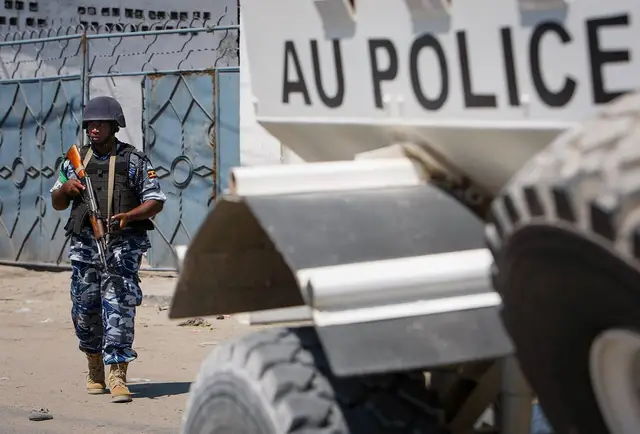 01CONFIDENCE: OBSERVED Security and conflict Africa's wars were discussed in side meetings with no money attached, while African armies grew and the African Union mission in Somalia ran short of cash.
 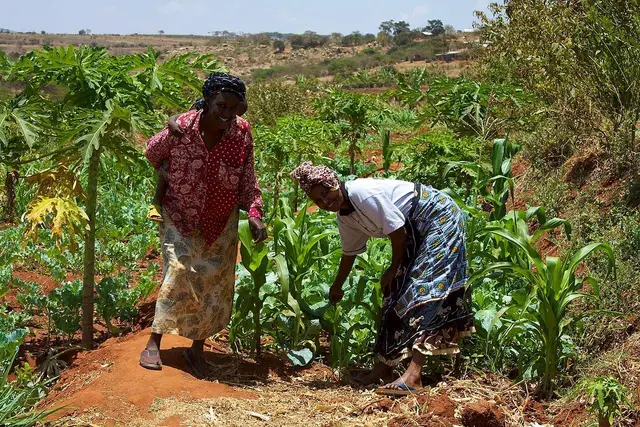 02CONFIDENCE: OBSERVED Food and agriculture Africa's hunger stopped rising in 2025 at the highest rate of any region, and the price of food, fertiliser and transport now decides who eats.
 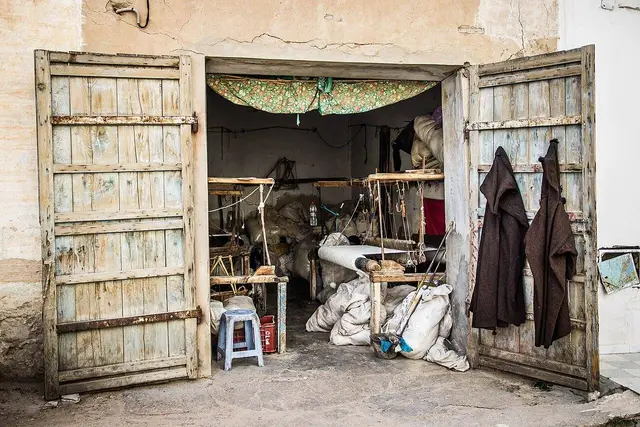 03CONFIDENCE: OBSERVED Livelihoods and labour Few young Africans earn a wage, and the routes abroad for work, study and sending money home are narrowing.
 - 04HealthHealth money for Africa now comes through one-to-one deals, and patients' data is part of the price.
- 05EducationGovernments in sub-Saharan Africa spend 3.6 times more on debt payments than on schools, so budgets now decide how far African children learn.
- 06AI and technologyThe UN has set up new bodies on artificial intelligence and funded none of them, while Africa's real limits are electricity and buyers who will commit to paying.
- 07Development cooperationGrants for Africa are shrinking fast, and the money that replaces them asks for data, a share of the budget or market interest.
- 08PhilanthropyPhilanthropy cannot replace lost aid, and its best use is to take the first risk so that Africa's own savings can be invested at home.
- 09Climate and energyMoney to help Africa cope with climate change is shrinking, while Africa sells its minerals and carbon credits on terms it has not yet set.
- 10WaterMost schools in sub-Saharan Africa lack basic water and toilets, a failure of national budgets that nothing agreed in New York will fix.
- 11Politics and governanceAfrica stays united on Security Council reform because its position never forces a choice between countries, while coups and unpunished killings at home weaken its case.
- 12The UN and diplomacyThe UN is shrinking because its largest members do not pay, and Africa entered the one big decision of the year, the choice of the next Secretary-General, divided and with its own candidates trailing.
Winners and losers
Each actor is scored from -2 to +2 on how much power it gained or lost at the Assembly. A high score records power gained and does not mean approval. The US border and visa rules score well because they set terms and enforced them, at Africa's cost.
Weights: agenda 15%, capital 20%, rule-making 20%, coalition 15%, execution 20%, African option value 10%. Select a bar to open its sector briefing.
Show the data as a table
| Item | Weighted power score at UNGA81, from -2 (lost) to +2 (gained) | Why |
|---|---|---|
| US as convenor of health money | 1.20 | It called the meeting that raised $2.997 billion for Ebola, and its health deals with 35 countries set their own terms. |
| Mission 300 electricity drive | 1.15 | The drive to bring electricity to 300 million Africans has connected more than 50 million people, though at about half the pace it needs. |
| European and NATO rearmament | 1.15 | World military spending reached $2,887 billion in 2025, with Europe up 14%, while European aid budgets were cut. |
| Gates Foundation | 1.05 | It timed its yearly report to the week and committed at least $1 billion over two years to AI, with no share for Africa published. |
| China's AI cooperation offer | 1.00 | It offered governments a partner on AI at a time when the UN's own AI fund had no pledges. |
| DRC cobalt supply management | 0.85 | The Democratic Republic of the Congo banned cobalt exports for most of 2025 and then set a quota for 2026, showing that an African producer can move a world market. |
| Latin American and Caribbean SG candidates | 0.80 | Candidates from Costa Rica and Guyana led the straw polls for Secretary-General. |
| Ethiopia | 0.80 | It pressed its claim to a permanent Council seat, sends troops to the Somalia mission and runs a large new dam on the Nile. |
| AfDB and ADF-17 | 0.80 | The African Development Fund raised $11 billion, and 24 African governments pledged five times more than in the last round. |
| US border and visa regime | 0.75 | The United States set new rules and enforced them, including visa bonds of up to $20,000 and a 1% tax on cash sent home from the United States. |
| UN AI track | 0.35 | The UN set up a scientific panel and a regular dialogue on AI, and its proposed fund has no pledges. |
| Sea-level rise agenda | 0.25 | The Assembly adopted a declaration on rising seas without a vote, and it commits no money. |
| African pension and insurance funds | 0.15 | They hold about $775 billion, much of it lent to governments, and no plan to invest more of it at home was announced. |
| Accra Reset | 0.15 | A panel set up by Ghana's President published a plan to merge global health funds and hand their work to African governments. |
| Africa's Security Council demand | -0.30 | Every senior UN official backed African permanent seats, and the talks still have no end date and no text. |
| Adaptation finance | -0.30 | Money to help Africa cope with climate change is about $26 billion a year against far larger needs, and no new pledges came. |
| Humanitarian food system | -0.55 | By 21 September the World Food Programme had received $5.41 billion of the $13 billion it needs for 2026. |
| AU on UN reform and succession | -0.60 | The African Union named no holders for the seats it demands and could not agree to back one candidate for Secretary-General. |
| WHO and the Pandemic Agreement | -0.80 | The United States has left WHO, the declaration on pandemics failed, and the largest health sum of the week was raised outside WHO. |
| South Africa | -0.85 | It was excluded from the summit of the Group of 20 (G20) large economies hosted by the United States, and its foreign minister gave its speech in New York. |
| AU and Smart Africa on AI | -0.95 | African bodies left AI out of their main priorities, so Africa brought no shared plan to the new UN bodies on AI. |
| African civil society | -1.05 | Aid to governments and civil society is projected to fall by about 40%, and some governments, such as Ethiopia, are closing groups down. |
| AU peace operations financing | -1.05 | The Somalia mission lacks about $70 million a year, and the UN office that supplies it will wind down from January 2027. |
| African universities and research | -1.10 | Sub-Saharan Africa has 88 researchers per million people against 1,486 worldwide, and the only new offer was AI certificates from technology firms. |
| Traditional bilateral aid | -1.20 | Aid fell 23.1% in 2025, and US aid fell by more than half. |
| Smallholder farmers | -1.20 | About 80% of fertiliser used in sub-Saharan Africa is imported, and only 5% of emergency food money reaches farming. |
What the world is refusing to see
Each issue is shown on four separate measures: how heavy the burden is, with its source, how much it matters for Africa's future, how much attention it received in New York and how much money moved. The class follows from those measures. The score multiplies the burden by the consequence and divides by attention, where high attention counts 3, medium to high 2.5, medium 2 and low 1. It helps to compare issues and makes no claim to be precise.
- Neglected
- A heavy burden, little attention in New York and no money moved.
- Visible but under-served
- Discussed in New York, with little or no money attached.
- Priority-concentrated
- Both attention and money arrived.
| Issue | Burden | Consequence | Attention | Money moved | Class | Score |
|---|---|---|---|---|---|---|
| El Niño over southern Africa | A 70% chance that rain will be lower than in any El Niño year since 1950; the plan would reach 11.9 million people | High | Low | About $89 million of the $111.3 million plan has no funding | Neglected | 9 |
| The Bab al-Mandeb shipping route | About 12% of world trade passes through the strait, and the Houthis now hold shores on both of its approaches | High | Low | None announced | Neglected | 9 |
| Health data in one-to-one US health deals | 35 agreements worth $24.1 billion, some giving access to genetic data and data on viruses | High | Low | Money flows under the agreements, and there is no African standard for them | Neglected | 9 |
| Trained health workers without jobs | 943,000 trained health workers without jobs, while Africa will be 5.85 million short by 2030 | High | Low | None announced | Neglected | 9 |
| Youth protests that turn into military rule | 11 successful coups since 2020; 53% of Africans would accept military rule if leaders abuse power | High | Low | None announced | Neglected | 9 |
| Savings locked in government debt | About $775 billion in pension and insurance funds; in Ghana, 85% of pension money is in government bills and bonds | High | Low | None announced | Neglected | 9 |
| Illegal fishing while ocean rules are rewritten | West Africa had over 40% of recorded illegal fishing by industrial boats from 2010 to 2022 | Medium to high | Low | None announced | Neglected | 7.5 |
| The cost of sending money home, and the new US tax | Sending money to sub-Saharan Africa costs 8.46% of the amount; money sent from the United States to Kenya fell 12.6% in the first half of 2026 | Medium to high | Low | None announced | Neglected | 7.5 |
| Kenya's bill on outsourced workers | It makes outsourcing firms answer for workers' claims, which in effect shields the companies that hire them | High | Low | Not applicable | Neglected | 6 |
| African research | 88 researchers per million people in sub-Saharan Africa, against 1,486 worldwide | High | Low | Only AI certificates offered by technology firms | Neglected | 6 |
| Electricity grids and the finances of power companies | Mission 300 connects about 25 million people a year, against the 55 million a year needed | High | Medium | A grids plan launched with no money | Visible but under-served | 4.5 |
| Money to adapt to climate change | $26 billion a year flows, against needs of $310 billion or more by 2035 | High | High | No new pledges | Visible but under-served | 3 |
| Ebola in the Democratic Republic of the Congo | 7,890 confirmed cases and 3,799 deaths by 23 September | High | Medium | $2.997 billion through a group of countries called together by the United States | Priority-concentrated | 4.5 |
Four scenarios for 2027 and 2028
The scenarios describe which logic dominates. They can coexist, and the probabilities are judgements to be revised each quarter.
Slow breakdown, with crises contained
35%Rules survive on paper, and crises are contained. Money and attention arrive only in emergencies.
- Watch
- The declaration on pandemics returning to the Assembly before December; any use by the Security Council of its 2023 decision to fund African missions, Resolution 2719, before the end of 2028; the UN peacekeeping budget in June 2027.
- Danger for Africa
- Long crises become normal, and health, school and welfare systems wear down.
- Opening for Africa
- Shared insurance, joint buying and money raised at home, built by Africans for Africa.
Deal by deal
30%Groups of countries, conveners and deals between two governments set the terms, one issue at a time.
- Watch
- More US health agreements; the second UN dialogue on AI on 3 and 4 May 2027; debt deals through the group of borrowing countries known as the Borrowers' Club.
- Danger for Africa
- Deals are struck country by country, and the weakest are left out.
- Opening for Africa
- Common African standards turn 54 separate negotiations into one position.
Rival blocs
20%Rival groups of countries harden, spend more on defence and control their supply chains.
- Watch
- Members of the NATO military alliance moving towards spending 5% of national income on defence; limits on exports of computer chips; rounds of new tariffs; disruption to shipping in the Red Sea and the Strait of Hormuz.
- Danger for Africa
- Borrowing becomes expensive, outside powers compete through local proxies, and Africa splits.
- Opening for Africa
- Selling minerals, votes and shipping routes to more than one bloc on better terms.
Renewed cooperation
15%Some tensions ease, real debt relief arrives, and global funds are refilled. Budgets for shared problems such as pandemics are protected again.
- Watch
- The declaration on pandemics adopted with money attached; a mandate to start treaty talks on autonomous weapons at the Geneva review conference in November 2026; the first pledges to the UN fund for AI; debt deals that cut payments; markets accepting ratings from the African Credit Rating Agency after its launch on 7 October 2026.
- Danger for Africa
- A return of grants invites a return to dependence on them, and African institutions built in the lean years are left to wither.
- Opening for Africa
- Lock gains into African institutions while money is available: the Peace Fund, Africa CDC, the African Credit Rating Agency and joint buying.
Four moves make sense in all four futures. The first is a common African standard for deals in which governments share the cost. The second is joint buying of cloud computing, medicines and fertiliser. The third is guarantees that let pension funds invest at home. The fourth is African money for African peace missions. The riskiest plan is any that assumes grants from single donor governments will return, because only the least likely future supports it.
The action agenda
Every recommendation opens a page on who leads, who contributes and what each audience can do. Choose an audience to see the actions that name it.
Within 30 days
Within 100 days
Within 1 year
Within 2 years
What do you think?
Comment on the whole briefing, or select any words on any page to highlight, comment on or share them. Comments are read by a person before they appear.
How this was made: Speeches were treated as evidence of position. Every claim about delivery was tested against money, negotiated text, votes, appointments or follow-through. Read the method, the limits and the image credits.
New to the UN? Start here · Glossary of terms · Method, limits and credits
UN General Assembly
The meeting of all 193 UN member states, each with one vote. It meets every year from September. It can make statements, elect members of other bodies and approve the UN budget, but most of what it says does not bind governments.
Veto and permanent members
China, France, Russia, the United Kingdom and the United States hold permanent seats on the Security Council. Each can block any decision on its own. Africa has no permanent seat.
UN Security Council
The 15-member UN body that decides on war and peace. It can impose sanctions and send peacekeepers, and its decisions bind all UN members. Five permanent members can each block any decision.
The UN and diplomacy briefingGlossarySource: un.org (opens in a new tab)
UN Secretary-General
The head of the UN's staff and its main public voice. The Security Council recommends a candidate and the General Assembly appoints them, usually for five years. António Guterres's term ends on 31 December 2026.
Pension and insurance funds
Funds that hold workers' retirement savings and insurance premiums. In most African countries they put most of their money into government bonds.
Words used on this page
- UN General Assembly
- The meeting of all 193 UN member states, each with one vote. It meets every year from September. It can make statements, elect members of other bodies and approve the UN budget, but most of what it says does not bind governments. Glossary · Source: un.org
- Veto and permanent members
- China, France, Russia, the United Kingdom and the United States hold permanent seats on the Security Council. Each can block any decision on its own. Africa has no permanent seat. The UN and diplomacy briefing · Glossary
- UN Security Council
- The 15-member UN body that decides on war and peace. It can impose sanctions and send peacekeepers, and its decisions bind all UN members. Five permanent members can each block any decision. The UN and diplomacy briefing · Glossary · Source: un.org
- UN Secretary-General
- The head of the UN's staff and its main public voice. The Security Council recommends a candidate and the General Assembly appoints them, usually for five years. António Guterres's term ends on 31 December 2026. The UN and diplomacy briefing · Glossary
- Pension and insurance funds
- Funds that hold workers' retirement savings and insurance premiums. In most African countries they put most of their money into government bonds. Our recommendation on this · Philanthropy briefing · Glossary